

Locksmith in Brickell, FL: Locked Out Upstairs or in the Garage, 24/7
A mobile locksmith for condo towers, cars and offices: a unit door opened after you get past the lobby, a lost key replaced inside the building's own keying, car keys and fobs programmed where the car is parked, at any hour.
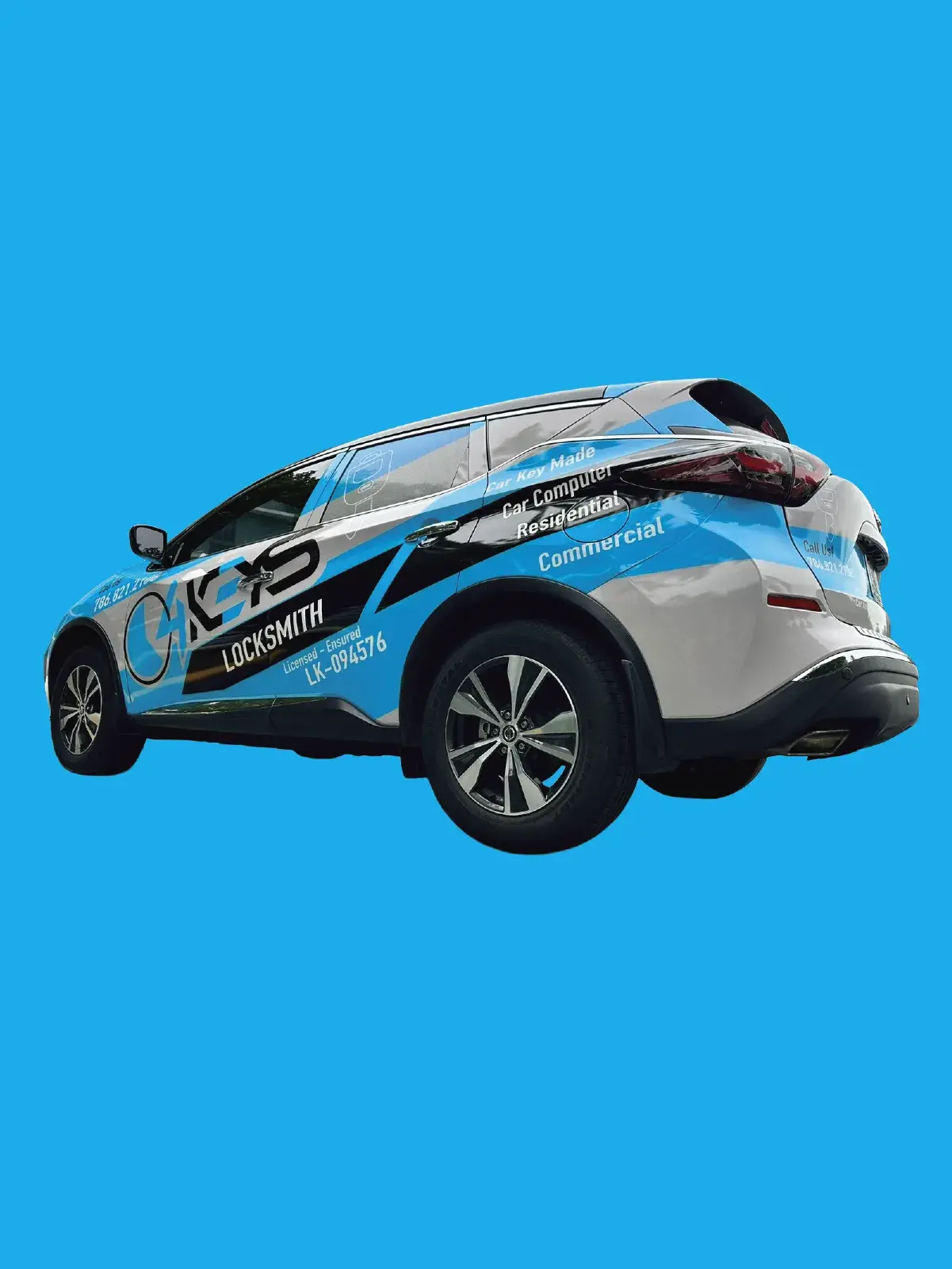
Miami-Dade License #LK-094576
Held by Qorinca LLC
15,000+ jobs completed
Same Day Solutions
Rapid Mobile Dispatch
Arrival in 30 min
NASTF VSP
Vehicle Security Professional
9-sec avg phone answer
ALOA Certified
Pro Certified Technicians
25 technicians on rotation
Who comes when the door shuts in Brickell, and what they can open
For Brickell, in Miami, FL, 4Keys Locksmith is a round-the-clock mobile locksmith whose company, Qorinca LLC, carries Miami-Dade County locksmith license LK-094576; its technicians hold NASTF VSP authorization and ALOA certification, and the business is insured and bonded. Cutters, programmers, pins and spare cylinders ride in the van, so the job gets done in your corridor, on your parking level or inside your suite rather than at a counter across town, since 4Keys keeps no storefront.
Brickell asks a locksmith to work vertically. A unit lockout starts at a lobby desk and an elevator before it reaches the door; a car key gets made two or three levels underground; an office lock may belong to a building that keys every suite under one master. This page explains the condo lockout in depth first, then covers every car, home and business job the van handles.
The van typically arrives 15 to 30 minutes after the call; the person who answers tells you the expected time and the cost while you are still on the line, before anyone drives over. Calls that land between 9 PM and 7 AM local time, and on Sundays and federal holidays carry an after-hours surcharge, already built into that figure. Every rate the company publishes sits on one pricing page, and the line is staffed in English and in Spanish.
Locked out of a high-rise condo unit: the lobby, the association's key and the cylinder on your door
A tower has more than one lock between the street and your sofa. The lobby door, the garage gate and the elevator answer to the building, through its fobs, cards and staff. The unit door answers to you. When you are standing in the corridor with the keys on the kitchen counter, the building layers are usually still open to you, and the problem is one cylinder. That changes who can help and in what order.
Start with the front desk. Under section 718.111(5) of Florida's condominium statute, the association can get into your unit at reasonable hours if it has to, whether to look after common elements, to fix the pieces of the unit it maintains, or to keep damage from spreading. Nothing in that section says the association gets a key, and associations handle it differently: some ask owners to leave a key on file under their own documents or rules, others do not. The result: one tower holds a key to every unit, the next holds none, and staff decide for themselves whether to open your door with it. Ask; it takes a minute. When there is no key at the desk, or the one there stopped fitting after a lock change, call 4Keys.
Why did the door lock behind you? NFPA 101, the life-safety code, calls for egress-side door hardware that operates without a key, tool or special knowledge (section 7.2.1.5.3), which is why the inside lever or knob on a unit entry door lets you out. Many lever sets and some mortise locks can also be left with the outside locked, so the latch catches each time the door closes. A closer pulling the door shut finishes the job. The lock did exactly what it was set to do.
At the door, the technician works on the hardware that is there, by non-destructive entry first, so a sound lock can stay in service after you are inside. A keypad or app deadbolt with flat batteries still carries a key cylinder; if that key is in the unit too, the cylinder is handled like any other (keyless locks get their own treatment on our Midtown Miami page). A lock that has to be drilled, or a key that is truly gone, leads to a new cylinder or a rekey.
That is where the building master matters. In towers keyed under a master system, your unit cylinder is pinned so that your change key and the building's master both turn it. A rekey or a replacement that ignores the system leaves the association with a door its master no longer opens, and the association may want a working key on file, as above. The right move is to keep the new cylinder inside the building's keying, which can involve management and the building's key records; the Edgewater page explains that rekey-or-replace decision step by step. Your part on the call: the tower address, the floor and unit, whether the desk holds a key, and what the lock looks like (knob, lever, deadbolt, keypad).
Sometimes the problem is one layer up. If the fob for the lobby, the garage gate or the elevator is lost, that credential belongs to the building: management issues it, keeps the list of active fobs and can switch the lost one off, so the replacement comes from the management office. The unit door, the mailbox and the car are where a locksmith comes in. Keep that split in mind at night, when a missing building fob and a missing unit key can happen together: the desk handles the first, the technician the second.
A unit lockout in Brickell, in the order it happens
What you do, what the building does and what the technician does, from the first call to a door that locks and unlocks again.
- 1
Call from the corridor or the lobby
Give the street address of the tower, the floor and unit number, and whether you are locked out of the unit, the garage or the car. Say which lock is holding the door: the latch only, a deadbolt as well, or a keypad lock. The quote comes in that conversation, ahead of any van being sent.
- 2
Ask the front desk about a key on file
If the association keeps unit keys, staff may be able to let you in before the van arrives, and that is the quickest outcome. If there is no key, or it no longer fits, warn the concierge that a technician is headed over, which keeps the visit from stalling at the lobby.
- 3
Get the technician to your floor
Towers that control elevators and garage gates by fob need someone to badge the technician up, or a guest pass from the desk. Tell the dispatcher which entrance and which loading or visitor bay to use, and whether vans may park there while the technician is upstairs.
- 4
Open the door on the hardware you have
Non-destructive entry comes first. If the lock is damaged or worn out and has to come off, you hear what replaces it, and what that costs, before any cutting or drilling.
- 5
Decide about the key that is missing
Keys left inside: you are done. Keys lost or taken: the cylinder can be rekeyed or replaced the same visit when parts allow, kept inside the building's master where there is one, and new keys cut and counted.
- 6
Test it from both sides
Lock and unlock from the corridor and from inside, with every new key, and confirm the deadbolt throws fully. If the association asks for a key on file, a spare can be cut for it before the technician leaves.
Home locks in Brickell, from a condo unit to a house on The Roads
Six home jobs in Brickell, the detail that shapes each, and what you should have at hand.
Rekeying a unit or a house
Lock replacement and deadbolts
Keypad and app locks
High-security cylinders
Night lockouts
Locks after a move
Car keys, fobs and ignitions, worked on in the garage space
Korean, Italian, American, British, Japanese and German makes, keyed with dealer-level software under NASTF VSP. Each card names the detail that steers the job.
Keys locked in the car
Spare key, or every key lost
Fobs and smart keys
Ignition that will not turn
Snapped key
Replaced modules
Company cars and vans
European models
Business locks in Brickell, from a suite door to a street-level shop
Who holds a key, who can copy it, and how fast that changes when someone leaves.
Rekey when staff leave
Master key systems
Card and fob readers
Exit devices
Ground-floor storefronts
Locked out of the office
Finding you in Brickell: ZIP codes, exits and the building type
The van covers the three Brickell ZIP codes: 33131 for the core of the neighborhood and Brickell Key, 33130 for West Brickell toward the Miami River, and 33129 for South Brickell and The Roads. Brickell runs from the river south to the Rickenbacker Causeway, and from Biscayne Bay west to I-95.
Coming off I-95, exit 1B (US 41 / SW 8th Street and SW 7th Street) lands at the northern end, and exit 1A (SW 25th Road and the Rickenbacker Causeway) at the southern end. West Brickell sits west of the Metrorail line on SW 1st Avenue; South Brickell begins at SE 15th Road. On Brickell Key, across its bridge, give the street address and the entrance you can reach. The same dispatch serves Downtown Miami across the river, Little Havana west of I-95 and Coconut Grove to the south.
The building type changes the first five minutes. In a tower with a concierge desk, the technician needs a way past the lobby and up the elevator. In an underground garage, say the level and stall, because the technician works on the car in that stall. In an office building, say whether the suite door has a card reader. On The Roads, a single-family house or a low-rise apartment usually means a gate, a side door and a deadbolt rather than a front desk.
Late at night, the lobby is the slow part, not the drive. If the tower has a night attendant, let them know someone from 4Keys is expected, and leave the dispatcher a number you will pick up when the van pulls up. For a car parked curbside, a cross street plus which side of the avenue it faces is plenty.
FAQ - Brickell Lockout and Key Questions
Condo doors, the front desk, a lost unit key, a car in the garage, fobs, night calls and who answers the phone.
Standing in the corridor, or on garage level two? Call from right there.
Give the tower address, the floor and unit or the parking space, and what is locked. You hear the price before a van heads to Brickell.