

North Miami Locksmith: Broken Keys Pulled Out, New Keys Cut From the Pieces
Half a key in the ignition, a blade snapped in the car door or the front door, or a key that is simply gone: a mobile locksmith comes to the car or the building in North Miami, removes the fragment, makes the replacement key on site, and repairs the lock when the break damaged it.
Miami-Dade License #LK-094576
Held by Qorinca LLC
15,000+ jobs completed
Same Day Solutions
Rapid Mobile Dispatch
Arrival in 30 min
NASTF VSP
Vehicle Security Professional
9-sec avg phone answer
ALOA Certified
Pro Certified Technicians
25 technicians on rotation
A key just snapped? Stop turning it, hold on to both pieces, and call.
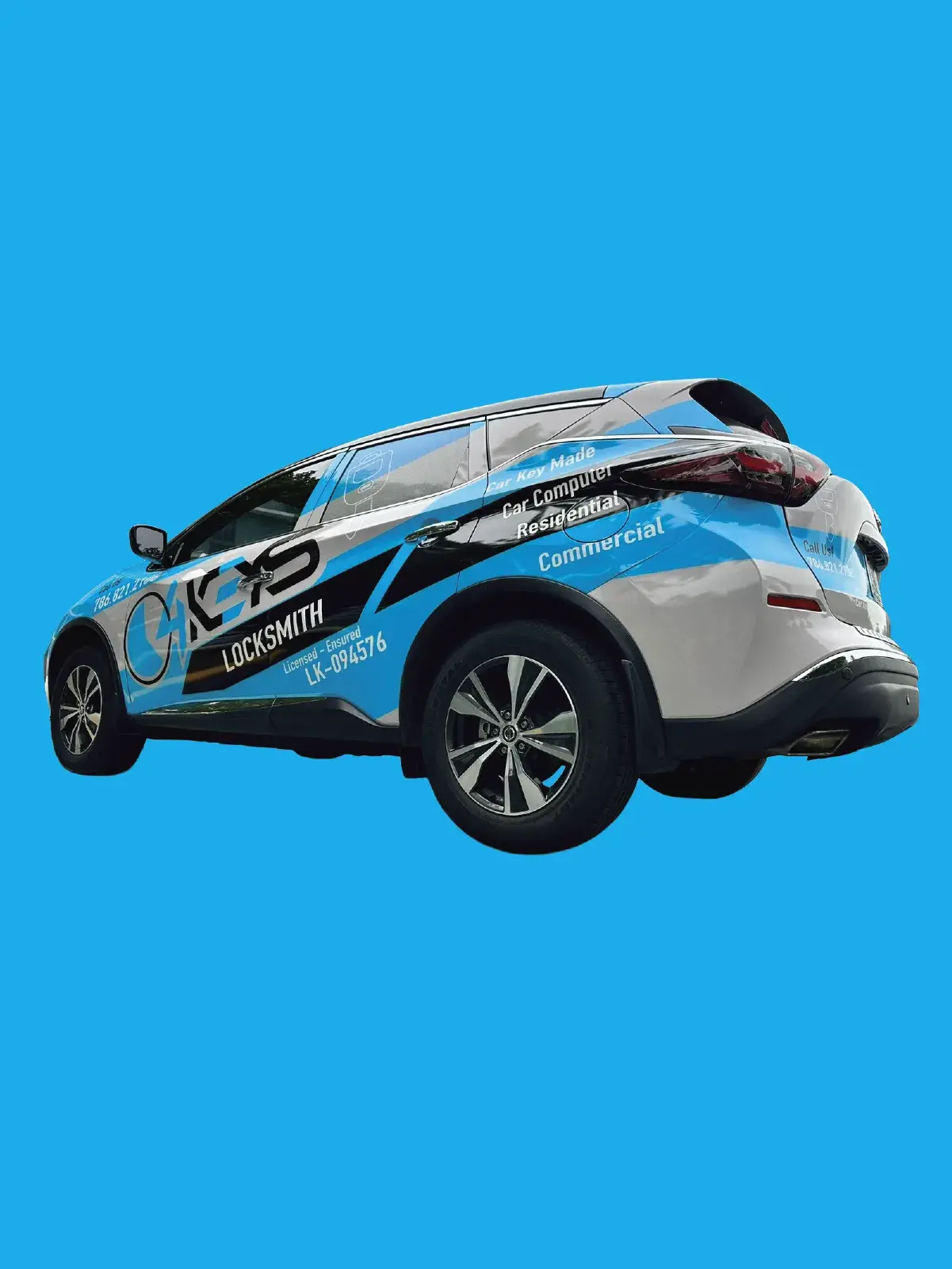
4Keys Locksmith is a mobile locksmith in North Miami, FL, available 24 hours a day, that extracts broken keys from car ignitions, car doors and house locks and cuts and programs the replacement at the vehicle; it is NASTF VSP authorized, ALOA certified, insured and bonded, and operated by Qorinca LLC under Miami-Dade County locksmith license LK-094576. There is no storefront: the extraction tools, the key machine and the programming equipment are in the van, which typically reaches North Miami in 15 to 30 minutes, and the dispatcher gives you the time on the call.
The first minute decides how big the job gets. Take your hand off the key and do not try to turn the lock with what is left in it. Keep the half in your hand exactly as it is, and do not push anything into the keyway: no glue, no spray, no paperclip. If the piece in the lock sticks out past its face, one straight pull with no twist is a fair try; if it sits flush or deeper, leave it for the technician.
When you call, say where the key broke (ignition, a door, the trunk, a house or office door), the year, make and model or the type of lock, and whether a spare exists. The price is given on that call, before a van is sent; published reference rates live on the 4Keys pricing page. Calls are answered in English and Spanish, and the full service is at broken key extraction.
Where the blade broke changes the job: ignition, car door, trunk or the front door
The extraction itself is the same idea everywhere: thin tools down the keyway beside the fragment, with the aim of leaving the lock working. What surrounds it is not.
Snapped in the ignition
Snapped in a car door
Trunk, hatch or glove box
Snapped in a house or office lock
What not to put in the keyway
When the cylinder has to come out
Cutting a new key from a broken one: what each piece still carries
A car key that breaks in two does not lose everything at once. Its two halves carry two different kinds of information, and each one can save part of the job. That is why the advice to keep both pieces is more than tidiness.
The bow carries the chip. The plastic head of a transponder key holds the chip the immobilizer reads before it lets the engine run. A clean break across the blade leaves that chip alone, so the head that stayed in your hand may still be recognized by the car. Depending on the key system, a working chip can be read and copied onto a new key, or a new chip is programmed while the old one stays registered; the difference between those two routes is explained on the Pembroke Pines page. Either way, a surviving bow is good news, and it is no reason to throw the head away.
The blade carries the cuts. A key blade is a pattern of depths at fixed spaces, called the bitting, measured from the shoulder, the small step where the blade meets the head. When the stub in your hand still has its shoulder and the fragment drawn from the lock carries the rest, the two are laid side by side and the full pattern is read off them, so a new blank can be cut to the same bitting. Edge-cut keys and laser-cut (sidewinder) keys are both read this way; only the machine set-up differs.
When the pieces are not enough. If the key broke right at the shoulder, or the stub was bent, filed or glued, there is no reliable reference to measure from. There are two other ways to the cuts. The cylinder can be decoded: a Lishi 2-in-1 tool cut for that keyway feels each wafer and translates its height into a cut depth. Or the key code is pulled from the VIN through NASTF, which releases key codes and immobilizer data to technicians registered as Vehicle Security Professionals; 4Keys holds NASTF VSP authorization. The documents the case requires are requested on the call. If no key at all is left afterward, the job becomes the all-keys-lost route set out on the Hialeah page.
Why keys snap in the first place. A brass or nickel-silver blade work-hardens with years of turning and grows brittle at the shoulder. Meanwhile the wafers inside an old cylinder wear, so the key needs more and more twist to turn, and one day the metal gives before the lock does. Using a key to pry, cut tape or open boxes speeds that up. A bent key is close behind: straightening it bends the metal a second time at the same spot, so it is weaker afterward, not stronger. A key that has started to drag in the ignition is the warning: a new key cut by code, or a look at the cylinder, is cheaper than an extraction. See a key that will not turn for that symptom.
A broken key visit in North Miami, from the first look to the key that works
What you will see happen at the car or the door, so you know what a careful job looks like.
- 1
A look before any tool goes in
The technician checks where the fragment sits (proud of the face, flush or recessed), whether anything was sprayed or glued into the keyway, and whether the plug was turned with the piece inside. That decides the tool and tells you up front whether the cylinder is at risk.
- 2
The fragment comes out with the plug at rest
A thin extractor shaped for the gap, a spiral, a barbed hook or a double hook, goes in beside the blade and draws the piece straight out. On an ignition, nothing is turned until the keyway is clear.
- 3
The cuts are recovered
The two halves are matched and the bitting read from them. If they are incomplete, the cylinder is decoded or the key code is pulled by VIN instead, and the dispatcher will already have told you which route applies.
- 4
A new key is cut and tried in the lock
The new blade is cut in the van and tried in the lock it came out of, then in the other locks it should open, the doors and the trunk on a car or the other doors in a house.
- 5
The chip is handled, and the lock is checked
On a transponder key, the chip is copied or a new one programmed so the engine starts. The cylinder is also checked for smooth travel; a lock that drags is the one that breaks the next key, and the technician tells you so rather than leaving it for later.
The rest of the car work in North Miami, done in the driveway or the garage
Locked out. A car with its keys sealed inside is opened through the door seam or at the lock with purpose-made entry tools, and a slim jim never goes near a modern door; the Miami Gardens page explains why in detail. Service: car lockout.
Spare keys and lost keys. Having a second key made while one still works is the cheapest protection against ever needing this page again: it is cut and its chip set up beside the car (car key duplication). When nothing is left to copy, the job grows: a code-cut blade plus a fresh chip taught to the immobilizer, priced above a duplicate, and on the first call the dispatcher tells you how your model year is done (lost car key replacement).
Fobs and smart keys. Push-button proximity fobs, flip keys and keys with buttons in the head are all set up at the vehicle. If you ordered one online, read the dispatcher its FCC ID, frequency and part number; when those match the car, it gets programmed (programming a fob bought online). A healthy fob that simply forgot the car is paired again, and a fob that has failed repeatedly is swapped for a new one carrying the 4Keys warranty (deprogrammed or broken fob). Trouble that started right after a battery swap has its own guide: key fob not working.
Ignitions, modules, fleets and European models. At the car, the technician sorts out whether a sticking or free-spinning key is the key's fault or the cylinder's (ignition repair). When a shop has installed a new body control module, engine computer or immobilizer module, it is matched to the car with dealer-level software, reached under the NASTF VSP credential (ECU and module programming). Company vans and pickups get their keys at the yard, many units per trip (fleet van key programming). German and British keys, BMW, Mercedes-Benz, Audi, Volkswagen, Land Rover, are part of the same work, which spans American, German, Japanese, Korean, British and Italian makes (luxury key programming).
Houses, condos and apartments: getting in, and deciding who has a key
From single-family streets to bayfront buildings with a front desk. What each job is and what the dispatcher needs to hear.
Locked out of the house
Rekey
Lock change or a new deadbolt
Smart locks
High-security cylinders
Condo unit doors
Shops and offices on Biscayne Boulevard and NE 125th Street: the locks a business depends on
Rekeys after staff turnover. A key that left with a former employee is closed out by rekeying every door it worked, then handing fresh keys to the team that remains. Bring a list of doors and keyholders to the call; a building that runs on a master system is redone against its existing chart. Service: commercial locksmith service.
Master keys and access control. A layered key system lets the owner open every door while a clerk opens only the front and the stockroom, and a restricted keyway keeps those keys from multiplying; planning is covered in the master key system setup guide. Where handing out metal keys has become the problem, a keypad or a card reader replaces them, a lost card is cancelled instead of rekeying, and some systems record each entry.
Exit devices and storefronts. A rear exit with a panic bar has to release from inside with a single push and still hold from the street side; bars that drag, fail to catch or lack an outside cylinder are fitted, tuned or replaced. Glass-and-aluminum shop fronts use slim hardware made for their narrow frames, from the hook-shaped deadbolt to the threaded mortise cylinder, and a worn door closer can be the reason such a door stops locking. A snapped key in a shop cylinder comes out with the same extractors used on a car, and a call from an owner shut out after hours is answered day or night.
Finding you in North Miami: ZIPs, I-95 exits and gates
4Keys Locksmith covers North Miami from NE 163rd Street south to 119th Street and from NW 17th Avenue east to the bay, on both sides of I-95. The ZIP codes are 33161 and 33181, which carry the North Miami postal name, and 33167 and 33168, which reach parts of the city under the Miami name. Give the street address and the ZIP.
From I-95, exit 10A puts you on NW 125th Street (SR 922), which runs east through the city; exit 10B joins NW 135th Street. Biscayne Boulevard runs along the east side, between the interstate and the bay. On either, name the nearest cross street and which side of the road the car is on.
Gates and front desks change the approach. Keystone Point and Sans Souci are gated, so give the gate or guard instructions on the call or meet the van at the entrance. A condo or apartment building with a concierge needs the technician's name left at the desk, and a car in a building garage is worked on in its space once the level and the spot are known. Near the commercial corridors, say whether the car is on the street, in a strip-center lot or behind a building, and give a storefront name to walk toward rather than a landmark. On single-family streets there is nothing to clear: a key snapped in the car and a sticky front-door cylinder can share one visit. The same dispatch covers North Miami Beach to the north, Miami Shores to the south and Opa-locka to the west.
FAQ - Broken Key Questions from North Miami
What to do in the first minute, getting the piece out without hurting the cylinder, cutting a key from the halves, the chip, glue and WD-40, driving with a broken key, price and night hours.
Half a key in the lock and half in your hand? Bring both to the call.
Tell the dispatcher where the key broke, the car or the lock, and whether a spare exists. You hear the price on that call, and then a Miami-Dade van heads to North Miami.