

Design District Locksmith, Miami FL: Restricted Keys, Lockouts and Car Keys
Keys nobody can copy without your say-so, cylinders rated against drilling and picking, and a car locksmith who programs keys and fobs where the car is parked. Day or night, by phone first.
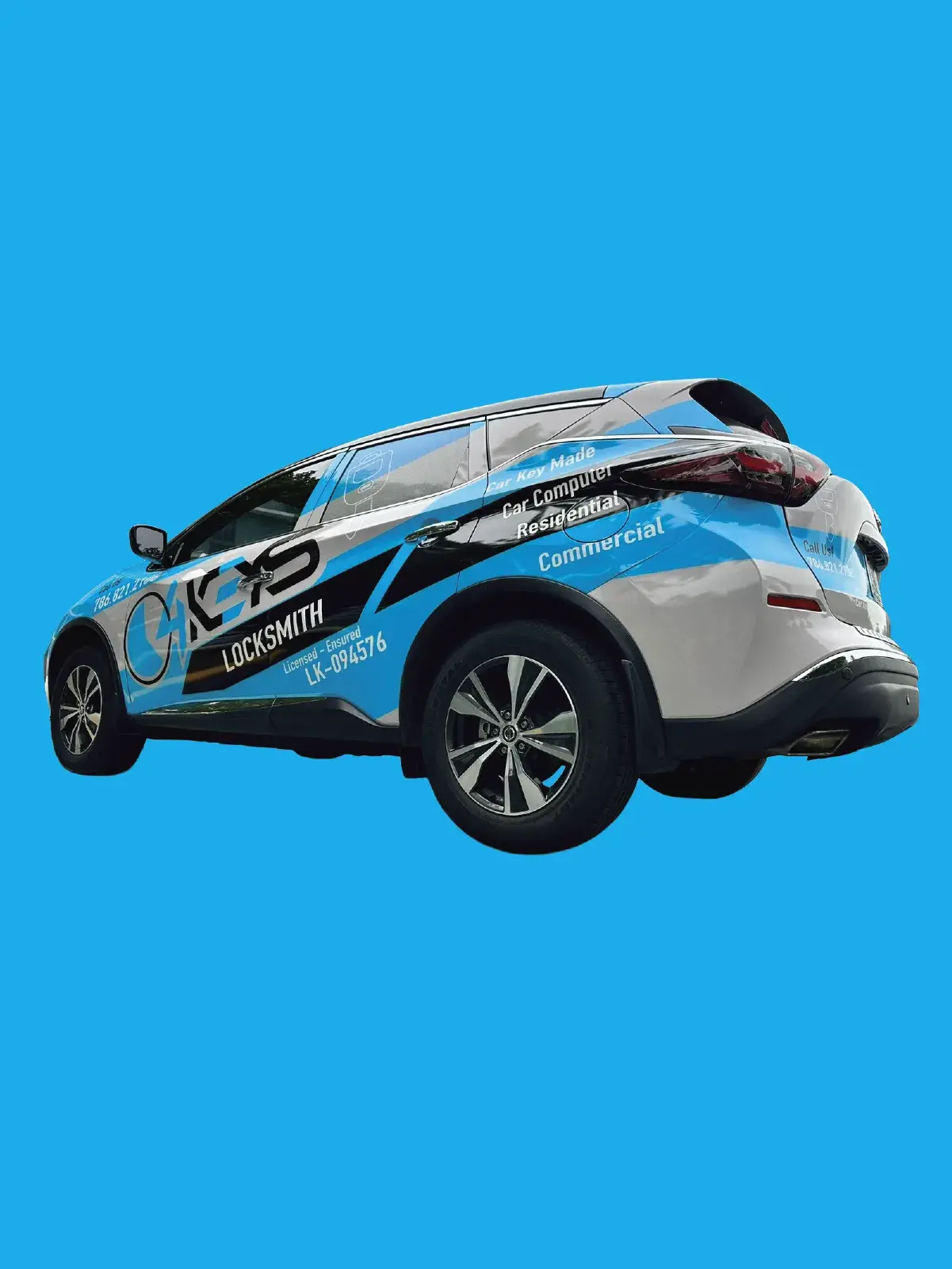
Miami-Dade License #LK-094576
Held by Qorinca LLC
15,000+ jobs completed
Same Day Solutions
Rapid Mobile Dispatch
Arrival in 30 min
NASTF VSP
Vehicle Security Professional
9-sec avg phone answer
ALOA Certified
Pro Certified Technicians
25 technicians on rotation
Locks for showrooms, offices and condos, and keys that stay under control
4Keys Locksmith, the Qorinca LLC company issued Miami-Dade County locksmith license LK-094576, sends a mobile locksmith into the Miami Design District at any hour, with NASTF VSP authorization and ALOA certification, and the company is insured and bonded. 4Keys is fully mobile, with no counter to walk into: cutting machines, cylinders and programming tools all arrive in the van, parked at your door or beside your car.
On any door where a copied key would be a real loss, the question that matters is less "is the door locked" than "who can open it, and who can get another key made." That is why this page goes deep on restricted and patented keyways and key control, then explains the rest of the work: business rekeys and master keys, condo and house locks, and the full car side, from lockouts to pairing a remote you ordered on your own.
Before a technician sets off, the dispatcher names the price and the expected arrival, typically within 15 to 30 minutes. Reference rates are public, and whoever picks up speaks English and Spanish. To check any locksmith's credentials before they arrive, the Miami page lays out what to ask.
What a restricted key really restricts: keyways, patents, authorization and ratings
Every key is cut from a blank whose profile matches the keyway, the shaped slot in the cylinder. Manufacturers sort keyways by who is allowed to get the blank. An open keyway, like Schlage's C family, is stocked and sold through ordinary locksmith and hardware distribution, and whoever has the key in hand can walk off with a duplicate. A restricted keyway is set aside for a particular end user: the manufacturer sells those blanks and cylinders only through an account with a short list of authorized buyers, and an order goes through only with a letter of authorization from the end user. A patented keyway goes one step further, because a utility patent on the blank or the cylinder makes it unlawful for anyone else to manufacture or distribute it. Schlage's Everest line and Medeco's keyway designs are sold on that basis.
A patent does not last forever. Under 35 U.S.C. 154 a utility patent runs 20 years from its filing date, so the protected period after it is granted is shorter. Once it lapses, other companies may legally make compatible blanks, although the maker's agreements with its distributors can keep restricting who sells them. Before choosing a system, ask how much patent life its keyway has left; a newer keyway buys more years of control.
Key control is the paperwork that makes the hardware mean something. In Medeco's carded programs, a copy is cut only for someone who presents a valid authorization card along with identification; the card is scanned, and the transaction is recorded, including how many keys were supplied. At the end-user level of a restricted system, the business names who may sign for keys, and an order without that signature is refused. Whatever the brand, decide three things on day one: who holds authority to order keys, where the record of issued keys lives, and what happens when someone leaves.
Restricted is not the same as strong. A cylinder can have a tightly controlled keyway and still give way to a drill. Two published tests address the physical side. ANSI/BHMA A156.30, the standard for high security cylinders, rates attributes at three levels with C the highest; key blank control is one of those attributes, and the drill test lasts 5 minutes at level B and 10 minutes at level C. UL 437 puts a lock through drilling, picking, prying, pulling, sawing, forcing and impressioning, and requires 5 minutes against drilling and 10 against picking. A high-security cylinder worth the name answers both questions: who can copy the key, and how long the cylinder holds under attack.
The good news for an existing door is that most of this lives in the cylinder. A high-security mortise cylinder screws into the lock case already in the door and drives it with its cam; a rim cylinder serves a rim lock, a night latch or an exit device; neither requires replacing the lock itself. Buildings on interchangeable cores work differently: a control key turned past the normal stop releases the core, and a whole door's keying changes in seconds. That makes the control key the one to guard most closely, since it pulls any core in the system. For glass storefront hardware, the Wynwood page covers the deadlocks these cylinders sit in.
Four levels of key control, side by side
How hard it is to get one more key made, from the hardware counter to the carded program. Which level fits your doors is settled on the call.
| Keyway level | Who can make the blank | What a copy takes | Where it fits |
|---|---|---|---|
| Open keyway | Any locksmith or hardware supplier | The key itself, or a key code | Doors where convenience outweighs control. |
| Restricted keyway | The manufacturer, for a limited list of authorized buyers | An order backed by the end user’s letter of authorization | Offices and shops that want copies to go through one channel. |
| Patented keyway | Only the patent holder, while the patent runs | An order through the authorized dealer for that system | Showrooms, stockrooms and any door where a copied key is a real loss. |
| Carded program | Program-certified dealers of a patented system | Authorization card plus identification, scanned and logged with the key count | Businesses that need a record of every key ever issued. |
Sources: Schlage Key Systems Answer Book; Medeco key control program documents; 35 U.S.C. 154 on patent term. Physical attack ratings (ANSI/BHMA A156.30, UL 437) are a separate question from the level of key control.
For showrooms, studios and offices: changing who gets in
The commercial side of the visit, door by door.
Rekey when staff changes
Master keys on a restricted keyway
Card and keypad access
Exit devices
Glass storefront hardware
Business lockout at any hour
Condo and house locks near the Design District
Unit doors, front doors, deadbolts and the keys that go with them.
Locked out at home
Condo unit under a building master
Rekeying
New locks and deadbolts
Smart locks
High security at home
Car keys, fobs and lockouts where the car is parked
Keys visible on the seat and every door shut: the technician opens the car by non-destructive entry, with an air wedge and long reach tool or a Lishi tool, depending on the model. The Miami Gardens page explains why a slim jim has no place on modern doors. Keys sealed in the trunk call for a trunk lockout; general service: car lockout.
Ordering a second key while the first still starts the car keeps the job short (car key duplication). Losing them all means the cuts are pulled from the VIN-based key code and an unused chip or proximity key is enrolled in the immobilizer, more steps and so a higher quote; how your particular year goes is confirmed during the first phone call. The Hialeah page walks through it. Sidewinder blades, the laser-cut kind, need their own cutter, as the Coconut Grove page shows.
Remotes and push-button-start fobs are set up at the vehicle. If you bought that fob online, on Amazon or eBay, the dispatcher compares its FCC ID, frequency and part number with your car first, and a match gets programmed (Kendall page). A fob in good shape that simply dropped its pairing is enrolled again; a unit with a track record of quitting is retired and a new fob under the 4Keys warranty takes its place (deprogrammed or broken fob). Service: smart key fob programming.
When the ignition fights the key, the diagnosis comes before the quote: worn wafers, a sheared actuator pin and a bound steering column lock are separate repairs (ignition repair, Hollywood page). A snapped blade is fished out, and its two halves become the template for the replacement (broken key extraction). Swapped a BCM or ECU? The new unit is synchronized with the car and its keys through dealer-level software reached under NASTF VSP (module programming, Doral page).
A company's vans and trucks can all be done in one stop at their parking spot; have the VINs ready, and the call covers any paperwork (fleet and van keys). Makes from six origins, the US, Germany, Japan, Korea, Britain and Italy, luxury badges included, are reached with that same dealer-level access; the Bay Harbor Islands page explains European key systems and luxury key programming the service.
Where the technician meets you between NE 36th and NE 43rd Streets
The Design District sits between NE 36th Street and NE 43rd Street, from North Miami Avenue east to Biscayne Boulevard. Most of its addresses carry ZIP 33137. Give the street number and avenue, NE 2nd Avenue for example, and say whether the door is on the street, in an interior courtyard or upstairs.
By expressway, I-195 exit 2A puts you on North Miami Avenue at the district's west edge, and exit 2B lands on Biscayne Boulevard to the east; I-95 meets I-195 at exit 4. Midtown Miami begins just south of NE 36th Street, Wynwood lies past it, and Edgewater runs along the bay to the southeast, all on the same dispatch.
Each kind of property changes the visit. A showroom with a glass front means storefront hardware and, where stock is valuable, a restricted or patented cylinder. An office upstairs may have a reader with a mechanical override key. A condo above street level may need the concierge or management to let the van in, so mention it on the call. If the car sits in a garage, name the entrance street, the floor and the bay number, and the van comes to it.
FAQ - Design District Locksmith Questions
Restricted and patented keys, who can order copies, ratings, retrofitting a door, a key lost with an employee, a car with no key, price and night hours, where to meet.
Keys you want kept under control, or a car shut tight? Start with a call.
Tell us what needs locking, rekeying or opening, and where it is. You hear a time and a price first; the van leaves for the Design District after you agree.