

Locksmith in Wynwood, FL: Storefront Locks, Car Keys and Lockouts, 24/7
A mobile locksmith for the shops, offices and apartments between I-95 and the railroad: glass-door deadlocks and closers set right, cylinders rekeyed, car keys and fobs programmed at the curb, any hour.
Miami-Dade License #LK-094576
Held by Qorinca LLC
15,000+ jobs completed
Same Day Solutions
Rapid Mobile Dispatch
Arrival in 30 min
NASTF VSP
Vehicle Security Professional
9-sec avg phone answer
ALOA Certified
Pro Certified Technicians
25 technicians on rotation
A Wynwood locksmith built around the shop door, the car and the apartment
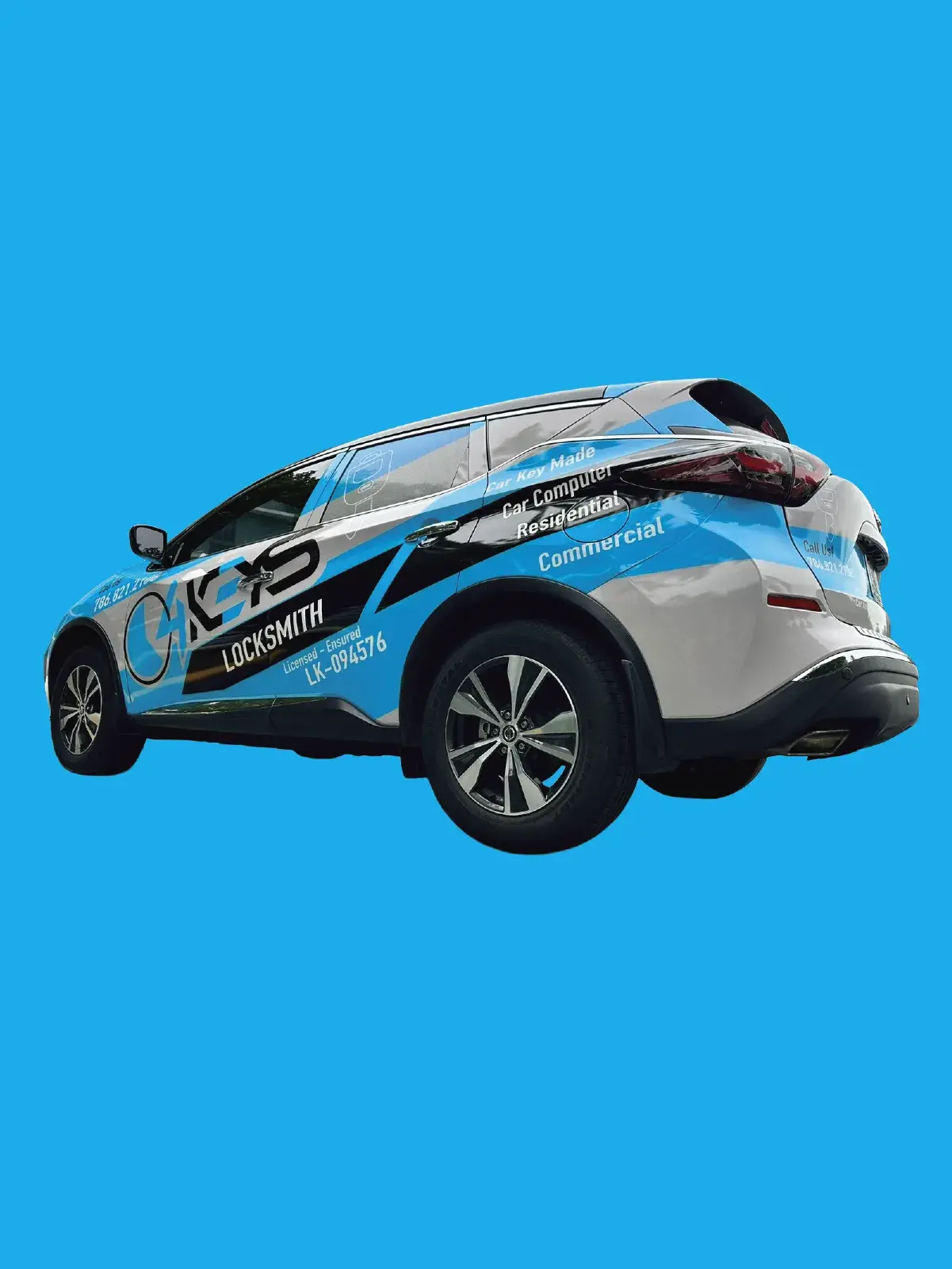
4Keys Locksmith is a 24/7 mobile locksmith serving Wynwood in Miami, FL, run by Qorinca LLC under Miami-Dade County locksmith license LK-094576, NASTF VSP authorized, ALOA certified, insured and bonded. There is no shop or counter to visit: the key machines, the programming equipment, the storefront hardware and the residential locks travel in the van, which is how a locksmith that comes to you works in practice.
Much of Wynwood meets the street through glass and aluminum, so this page spends its longest section on storefront doors: the narrow-stile deadlock, the deadlatch and paddle, the cylinder that drives them and the closer that decides whether the door ever reaches the strike. After that come the business jobs, the car work (lockouts, new keys, fobs, ignitions, modules, fleet vans) and the locks on apartments and houses.
On the phone you hear two things before anyone drives over: when the van should arrive (typically 15 to 30 minutes) and what the job costs. Reference rates are posted on the 4Keys pricing page, and the line works in English or Spanish.
Inside a narrow-stile storefront door: deadlock, deadlatch, cylinder and closer
An aluminum storefront door is a glass panel held in a thin frame, and the vertical frame member on the lock side, the stile, leaves very little room for hardware. A house deadbolt with its 2-3/8 or 2-3/4 inch backset will not go in. Storefront locks are built to sit inside that stile instead, and their backsets are measured in fractions of an inch: the Adams Rite MS1850S deadlock is sold in 7/8, 31/32, 1-1/8 and 1-1/2 inch backsets. When a storefront lock is replaced, matching the backset already cut into the stile is the first measurement the technician takes.
The deadlock is the night lock. In the MS1850S a pivot swings out a laminated stainless steel bolt close to three inches long, and its center ply carries an alumina-ceramic core so a hacksaw blade slides instead of cutting. A hook-shaped version of the same bolt exists for sliding narrow-stile doors, where the hook resists the door being pulled sideways away from the jamb. If your door slides instead of swinging, say so on the call, because the straight bolt and the hook bolt are different parts.
The deadlatch is the day lock. A heavy-duty deadlatch such as the Adams Rite 4900 latches each time the door closes and is opened from inside with a paddle or a lever; the 4591 paddle is made for the 4300, 4500 and 4900 series. The 4900 also has a bolt holdback: with the latchbolt pressed in, a reverse turn of the key holds it back so the door swings free during business hours. That convenience has a cost, because a door left on holdback stays unlocked until someone turns the key back the other way.
Both locks are driven by a mortise cylinder, a threaded cylinder screwed into the lock case, held by a set screw and turning a cam at its back. This family of locks takes the MS cam, and the cylinder comes in several lengths so its face sits right against the stile and any trim ring. That is good news for a business that loses a key or a staff member: the cylinder can be rekeyed, swapped for one on the building's keyway, or upgraded to a high-security cylinder with a restricted keyway, while the lock case stays in the door.
Then there is the closer, and a storefront that "will not lock" may have nothing wrong with its lock at all. A heavy-duty closer like the LCN 4040XP has four adjustments: closing power, backcheck, main or sweep speed, and latch speed. A door that drifts to within an inch of the frame and stops, or bounces back, points to a latch speed set too slow; the latch valve is meant to run slightly faster than the sweep so the door has the momentum to push past the latch. Below the closer are the pivots. A worn offset pivot bearing lets the door sag, and a loosened tie rod inside the door racks it out of square; either one makes the bolt drag on the strike, and replacing the lock before the door is straight only moves the problem.
Miami-Dade sits in the Florida Building Code's High-Velocity Hurricane Zone, so tell the dispatcher when a storefront is impact-rated and the replacement hardware is confirmed for that door before the visit. Impact-rated doors and their multipoint locks are explained on their own page.
A glass door that will not lock at closing: the order the technician checks it in
Five checks, from the closer at the top of the door down to the lock body. Each one rules out a cause before any part is replaced.
- 1
Does the door reach the frame on its own?
If it stops short or bounces off the strike, the closer comes first: the latch speed and closing power are set before anyone touches the lock. A closer leaking oil is replaced rather than adjusted.
- 2
Is the door square and hanging level?
A gap that widens toward one corner, or a door that scrapes the threshold, means the pivots or the tie rod. The door is brought back into square so the bolt lines up with its pocket again.
- 3
Does the bolt meet the strike cleanly?
With the door held closed, the deadlock is thrown by hand. A bolt that catches the edge of its opening is a strike alignment job, not a new lock.
- 4
Does the key actually move the bolt?
A key that turns freely while the bolt stays put points to the cylinder: a loose set screw, a worn cam, or a cylinder of the wrong length. The cylinder is reseated, rekeyed or replaced.
- 5
Is the lock body itself worn out?
Only then is the deadlock or deadlatch replaced, in the backset already cut into the stile and, on an impact door, with hardware confirmed for that door. The price for that part is given before the work starts.
Business locks in Wynwood: who holds a key, and how quickly that changes
Shops, studios, offices and the steel service doors at the back of the building.
Rekey after an employee leaves
Master key systems
Access control
Exit devices on the back door
Locked out of the shop
High-security cylinders
Getting the van to your door in Wynwood, and what each kind of building asks for
Wynwood sits south of I-195 and east of I-95; give the street address, since the neighborhood shares its edges with the ones around it. Its addresses fall under two ZIP codes, 33127 and 33137, so give the full street address with the NW or NE prefix and the dispatcher places the van from there.
Coming off the expressways, I-195 exit 2A drops onto North Miami Avenue at the north end of the neighborhood, and exit 2B reaches Biscayne Boulevard; from I-95, exit 4 is the interchange with I-195 and SR 112. On NW 2nd Avenue or any of the numbered streets, name the nearest cross street and which side of the street the door is on. The same dispatch covers Midtown Miami, Edgewater toward the bay and Downtown Miami to the south.
The building decides what goes in the van. A street-level shop with a glass front means narrow-stile deadlocks, deadlatches, cylinders and a closer. A building with a steel service door at the back adds an exit device or a heavy commercial lock. An office suite upstairs may have a reader on the door and a key override behind it. An apartment above the shops means a unit door, a building entry and maybe a mailbox. For a car, give the street and the nearest cross street, or the parking garage, its level and the row; the car is worked on where it is parked.
Car keys and lockouts, at the curb or in the garage
American, German, Japanese, Korean, British and Italian makes. Each card says what changes the job and where it is explained in depth.
Locked out of the car
Spare key or every key lost
Fobs and smart keys
Ignition that will not turn
Key snapped in the lock
A replaced module
Delivery and work vans
European and luxury makes
Apartment and house locks, from the unit door to the deadbolt
Locked out of a loft or a house, the technician works the knob, lever or deadbolt by hand first; drilling is the last resort, not the opening move. When the key will not turn up again, repinning the cylinder during that visit closes the gap. In a rental building the unit cylinder may answer to a building master, a setup the Brickell page untangles. After dark, see emergency locksmith service.
A rekey swaps the pin stack so every earlier key goes dead while the hardware stays put. Landlords do it between leases (the Little Havana page lists which doors) and new owners do it after closing (rekeying after a purchase). Ask for the front, back and deadbolt on one key while the cylinders are open. See residential locksmith service.
Hardware past saving is replaced with a new set, and a knob-only door can gain a deadbolt, which means a fresh bore and strike, the Pinecrest page's subject. Keypad and app locks get mounted and programmed too, and whether a rented or condo door may take one is weighed on the Midtown Miami page. For keys that a mall kiosk cannot copy, ask for a restricted, high-security cylinder.
Calling about a storefront? Three details bring the right parts on the first trip
Say whether it is a single door or a pair, whether it swings or slides, and whether it is impact-rated. Describe what happens: the key turns but nothing moves, the door stops short of the frame, or the bolt scrapes. If you can, send a photo of the lock edge of the door. With that, the dispatcher can name a price for the job while you are still on the line, ahead of dispatch; reference rates sit on the pricing page.
FAQ - Wynwood Locksmith Questions
Storefront doors that will not lock, rekeying a glass door, closers, shop lockouts, impact doors, a lost car key, arrival time and language.
Door will not lock, key gone, car shut tight? One call sorts it.
Describe the door or the car and where it is. The same call gets you a time and a price, and nothing rolls toward Wynwood until you say yes.