

Locksmith in Sunny Isles Beach, FL: Salt-Air Locks, Car Keys and Fobs, 24/7
A mobile locksmith for ZIP 33160: stiff or pitted locks freed, rekeyed or swapped for hardware with a finish chosen for the coast, car keys cut and programmed where the car is parked, and condo and business doors handled at any hour.
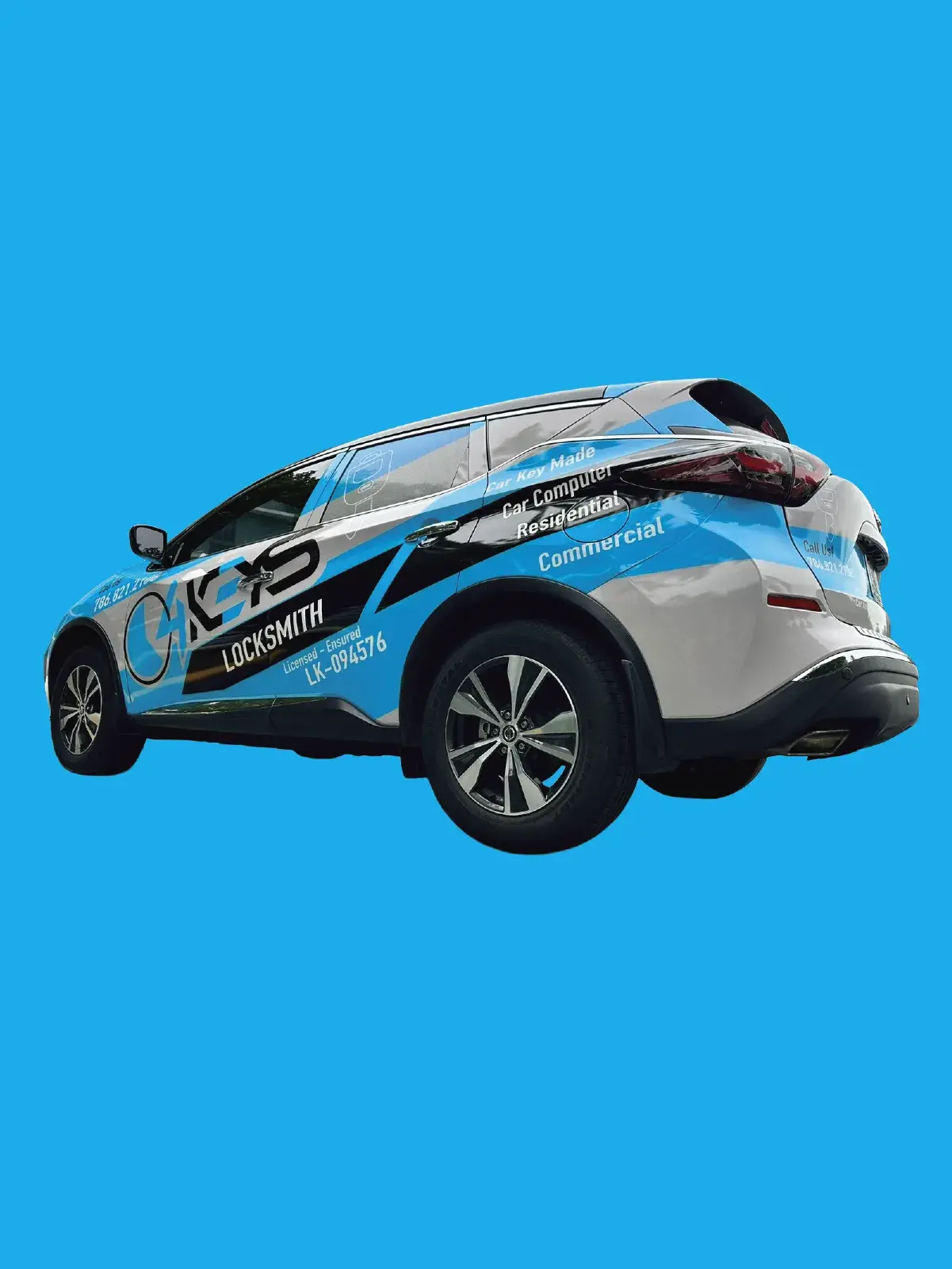
Miami-Dade License #LK-094576
Held by Qorinca LLC
15,000+ jobs completed
Same Day Solutions
Rapid Mobile Dispatch
Arrival in 30 min
NASTF VSP
Vehicle Security Professional
9-sec avg phone answer
ALOA Certified
Pro Certified Technicians
25 technicians on rotation
Who comes to the door in Sunny Isles Beach, and what rides in the van
4Keys Locksmith is a 24/7 mobile locksmith serving Sunny Isles Beach, FL, run by Qorinca LLC (Miami-Dade County locksmith license LK-094576), and ALOA certified, NASTF VSP authorized, bonded and insured. There is no shop or counter to drive to: the key machines, the programming equipment and the replacement cylinders travel with the technician, the way a locksmith who comes to you works, and the technician typically arrives 15 to 30 minutes after the call, at a time the dispatcher states.
The page starts where this address is different: a lock mounted a short walk from the ocean ages faster than the same lock inland. The first sections explain what salt does to a lock, how to read the finish code before buying hardware, and the point where servicing stops making sense. After that come the car work (lockouts, keys, fobs, ignitions, modules), the house and condo work, and the business work, each explained by what makes the job harder or easier and what you can prepare.
Every job is priced over the phone first, before any technician sets out; reference rates are on the 4Keys pricing page. The phone is staffed in English and Spanish, and the Spanish-language service page explains the same work in Spanish.
Locks near salt air: finishes, corrosion, upkeep and when replacing wins
Salt carried in the air settles on exterior hardware, and once that film is damp it behaves as an electrolyte, the conductive liquid that corrosion needs. A lock suffers in two places. Outside, the finish dulls, spots and eventually blisters. Inside, the pins, springs, cam and latch start to drag, so a key that used to slide in now needs a jiggle, and a deadbolt that used to throw with a flick of the thumb has to be pushed. A cylinder that sticks only on damp mornings is giving the early warning.
American door hardware finishes are named by the numbering system in ANSI/BHMA A156.18, the Builders Hardware Manufacturers Association standard for materials and finishes. That standard also sets the tests a finish has to pass, among them salt spray (fog) exposure, humidity and UV, with failure judged by corrosion, staining and blistering. Each code names a base metal and a coating: 605 is clear-coated bright brass (the old US3), 626 is satin chrome plated over brass or bronze (US26D), 613 is oil-rubbed bronze (US10B), and 630 is satin stainless steel of the 300 series (US32D).
Near the coast the metal under the finish decides how the hardware ages. Hardware distributors name 630 satin stainless, whose chromium and nickel resist corrosion, as the standard choice for coastal and exterior doors, and note that plated door closer arms show corrosion on the coast. Ives, an Allegion hardware maker, lists stainless steel, brass and bronze as its corrosion-resistant materials. A plated or lacquered finish protects only while it is whole, and Schlage warns that paint thinners and strong cleaners damage protective coatings and lead to oxidation and discoloration.
Mixing metals adds a second problem. When two dissimilar metals touch and salt water bridges them, they form a galvanic cell and the less noble metal corrodes first; aluminum against stainless steel is the textbook pair, with the aluminum giving way. That matters on aluminum frames and storefront doors, where an insulating washer or sleeve breaks the contact and replacement screws are chosen with the frame in mind. The hardware on balcony sliders is its own subject, covered on the sliding and patio door locks page.
Upkeep is simple and mostly about what not to do. Locksmith Ledger, the trade magazine, describes the classic mistake: spraying a wet product into a keyway that the factory lubricated with a dry one, which turns the two into sludge. The cylinder is cleaned first, then a dry lubricant goes in; PTFE dry lube does not attract dust and adds some corrosion protection. Penetrating oil makes a sticky lock feel better for a day and then holds the grit the wind carries in.
Replacement beats servicing when the plug still drags after cleaning, when the latch or bolt is pitted enough to bind in the strike, when the finish has blistered through to base metal on a door you plan to keep, or when a rekey would put fresh pins inside a body that is failing. A rekey changes the pins and the key; it does nothing for a corroded housing. When new hardware goes on, ask for the finish code: 630 stainless, or solid brass and bronze, are the materials the hardware makers name for corrosive settings, and 4Keys Locksmith fits that hardware at the door in Sunny Isles Beach.
Read the finish code before buying a lock for a salty door
Codes and materials as ANSI/BHMA A156.18 and the BHMA finish charts list them. The last column is how each one behaves where salt air reaches the door.
| BHMA code | Old US code | Base metal and finish | Near salt air |
|---|---|---|---|
| 630 | US32D | Satin stainless steel, 300 series | Named by hardware distributors as the standard pick for coastal and exterior doors: the corrosion resistance is in the metal itself, not in a coating. |
| 626 | US26D | Satin chrome plated over brass or bronze | Ives offers its weatherproof bottom pivot in 626 or 630. The plating guards the surface while intact, and the base underneath is brass or bronze rather than steel. |
| 605 | US3 | Bright brass, clear coated | The clear coat is the barrier. Once keys, rings or harsh cleaners wear it through, the brass beneath tarnishes. |
| 613 | US10B | Oil-rubbed bronze, dark | Schlage asks for a soft cloth with a little vegetable oil on this finish, and mild soap and water on most others. |
Sources: BHMA A156.18-2020 Hardware Highlights, BHMA finish charts, Ives corrosion-resistant solutions, Schlage finish care guidance. Restricted keyways on the same hardware are explained on the high-security keys page.
Keeping an exterior lock turning when the wind carries salt
What an owner can do between visits, and the signs that the locksmith should take over.
- 1
Wash the hardware with mild soap and water, then dry it
A soft damp cloth and mild soap lift the salt film without hurting the finish. Dry the hardware afterwards. Skip abrasive pads, chemical cleaners and paint thinners: Schlage names them as the products that strip protective coatings.
- 2
Keep wet oils out of the keyway
A penetrating spray loosens a stiff cylinder briefly, then mixes with the factory dry lubricant and the grit the wind brings, and the lock ends up stiffer than before.
- 3
Clean the cylinder, then use a dry lubricant
A PTFE dry lubricant on a clean cylinder keeps the pins moving without collecting dust. Graphite works in small amounts; piled on, it packs the keyway.
- 4
Watch the bolt and the strike, not only the key
A deadbolt that has to be pushed home, a latch that drags across the strike, or orange or white crust at the edge of the door all point to corrosion where the key cannot reach. Those are hardware repairs, and a technician can see them in one visit.
- 5
Rekey or replace: judge the body, not the key
If the housing and bolt are sound, a rekey gives new keys for little hardware. If the body is pitted or the plug binds after cleaning, replacing it in 630 stainless or solid brass is the repair that lasts. Tell the dispatcher which it looks like and the van comes loaded for it.
Doors at home: getting in, new keys and new hardware
Houses, townhouses and condo units: what each job involves and how to prepare.
Locked out of the house or unit
Rekeying
New locks and deadbolts
Smart locks
High-security cylinders
Seized or corroded locks
Car keys, fobs and ignitions, sorted out beside the car
Cars from American, European (German, British, Italian) and Asian (Japanese, Korean) makers, and what changes the work on each kind of key.
Car door shut with the keys inside
Spares, replacements and no key left
Key fob and smart key programming
Ignition that sticks or spins
Snapped key extraction
Replaced modules
Fleet and work vehicles
European and luxury models
Shops, offices and building staff: keys, cards and exits
Who opens which door, and how quickly that can change.
Rekey when staff leave
Master keying
Access control
Exit devices
Storefront doors
After-hours business lockout
On the call: what helps the dispatcher quote and load the van
For a door, say whether the lock turns stiffly, has seized or is broken, and send a photo of the lock and any finish stamp on the edge of the bolt. For a car: year, make, model, the number of working keys, and any fob you already bought. With that, the price is set on the phone before a van moves. For work between 9 PM and 7 AM local time, and on Sundays and federal holidays, an after-hours surcharge is added and named in that same call. Rates: pricing.
Reaching you in Sunny Isles Beach: ZIP, roads and building types
Sunny Isles Beach mail is addressed to ZIP 33160, a Miami-Dade ZIP that also takes in parts of North Miami Beach and Aventura. Give the street number on Collins Avenue or the cross street, and the dispatcher places the van from there.
Collins Avenue, signed as State Road A1A for much of its length, is the north-south spine of the city. From the west, the NE 163rd Street and Sunny Isles Boulevard pair (State Road 826) comes in from North Miami Beach and the Golden Glades Interchange, where I-95, the Turnpike and the Palmetto Expressway meet, and the William Lehman Causeway (NE 192nd Street, State Road 856) crosses from Biscayne Boulevard in Aventura. The same dispatch covers Aventura, North Miami Beach and Bal Harbour to the south.
The building decides the approach. In a high-rise with a front desk and a garage, give the desk a heads-up and say which garage level and space number the car is in. In a low-rise condominium, say which entrance is open. At a house, say whether the problem is the front door, a side gate or a balcony door. For an exterior lock that faces the ocean, ask the technician for the corrosion check described above during the same visit.
FAQ - Sunny Isles Beach Locksmith Questions
Sticky locks, salt and finishes, lubricants, rekey or replace, fobs bought online, garages, price and night hours, and credentials.
A lock that drags, a key that is gone, a fob that quit? Call and get the price first.
Tell the dispatcher the address, what the lock or the car is doing, and how many keys still work. The price is settled on that call, before a technician heads up Collins Avenue.