

Auto Locksmith in Hollywood, FL: Ignitions, Keys and Locks, Day or Night
When the key will not turn, turns with nothing behind it, or sticks halfway, a technician comes to the car, finds which part failed and repairs it there. Keys, fobs, lockouts and the locks on your home or business are handled the same way, at any hour.
Miami-Dade License #LK-094576
Held by Qorinca LLC
15,000+ jobs completed
Same Day Solutions
Rapid Mobile Dispatch
Arrival in 30 min
NASTF VSP
Vehicle Security Professional
9-sec avg phone answer
ALOA Certified
Pro Certified Technicians
25 technicians on rotation
Your car, your front door, your shop: one mobile locksmith for Hollywood
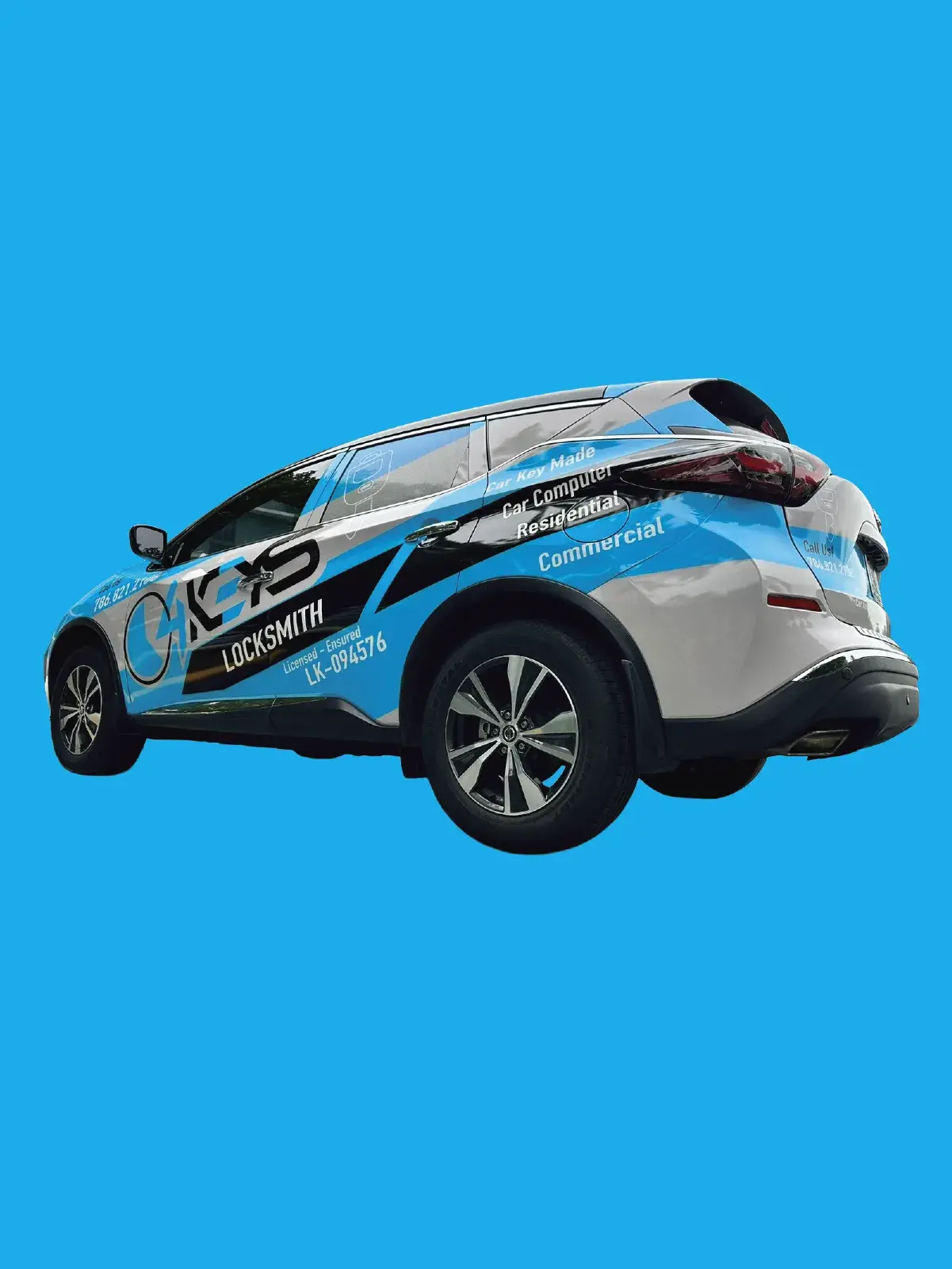
4Keys Locksmith is a mobile auto, home and business locksmith working in Hollywood, FL around the clock, NASTF VSP authorized, ALOA certified, insured and bonded, and operated by Qorinca LLC. The van serves as the workshop: key machine, programming equipment, ignition parts and lock hardware travel to the address you give, because a mobile locksmith has no shop to visit. Arrival is typically 15 to 30 minutes, and you hear the estimate for your street before hanging up.
The car work runs from lockouts to new keys, fobs and smart keys, modules and fleets, and the longest section here covers the ignition: what it means when a key refuses to turn, spins loose, or catches halfway, and how each one is repaired beside the car instead of at the end of a tow. House and business locks follow further down.
The price is given on the phone before anyone is dispatched, and the published rates sit on the 4Keys price list. The phone is answered in English and in Spanish, and Spanish-speaking technicians work on the team.
Car keys and car locks, worked on where the car stopped
Domestic, Japanese, Korean, German, British and Italian makes, with dealer-level software reached through NASTF VSP. Each card names what shapes the job.
Ignition repair and replacement
Locked out of the car
New keys and all keys lost
Fobs, flip keys and smart keys
A key broken in the lock
Modules after a replacement
Work trucks and fleet vans
European and luxury models
Will not turn, spins free, or binds halfway: reading what the key tells you
Two parts share the word "ignition" and fail in different ways. The ignition lock cylinder is the mechanical lock the key slides into. The ignition switch is an electrical part mounted behind it, and the cylinder turns it through a short shaft, the actuator pin, cam or tailpiece depending on the design. A key that cannot rotate the cylinder never reaches the switch. A key that rotates the cylinder without moving the switch has found a broken link between them. Keeping those two apart is the first step of every ignition diagnosis.
Car ignitions are wafer locks, not the pin tumbler locks on a front door. Flat, spring-loaded wafers sit across the plug, and each cut on the key blade lifts its wafer until the edge is flush with the shear line; only then can the plug rotate through Accessory, Run and Start. Some cylinders add a sidebar on top of that: General Motors cylinders built before 2000 used six double-bitted wafers with a side bar that drops in only when every wafer is level. As the blade wears and the wafers wear against it, the margin disappears, and the key starts to need jiggling, a little pressure, or a second try.
A key that will not turn at all has four usual suspects. The steering column lock may be holding the plug: when the wheel is turned with the key out, a lock pin drops into the column, and tension on the wheel clamps the cylinder until the wheel is rocked. On an automatic, the shifter may not be fully in Park. The key may be worn past the point where its cuts lift the wafers. Or the cylinder itself has worn or seized. The first two cost nothing and take under a minute, which is why they head the checklist further down. The second two belong to a locksmith.
A key that spins freely, with no drag and none of the detent clicks between positions, has usually lost its link to the switch: the actuator pin has broken or the cam has sheared. The dash lights help tell this from a weak battery. With a spinning key and a sound battery, the dash lights still come on and the key feels wrong in the hand; with a dead battery, the key turns with its normal resistance and nothing lights. A spinning key has its own guide, when the key spins in the ignition, and a locked one has when the key will not turn.
Binding, the key that turns hard or stops partway and then goes, is wear in progress. The repair depends on where the wear sits. If the spare key turns cleanly, your usual key is the problem, and what fixes it is a fresh blade made from the key code the manufacturer recorded for your VIN, never a copy of the tired blade, which only reproduces its worn cuts. If both keys bind, the cylinder is rebuilt or replaced, and where the replacement can be set up for the key in your pocket, it is; otherwise a key is cut and programmed for the new cylinder. When no code is on file, the depths are read straight from a lock on the car with a Lishi 2-in-1 pick and decoder.
One fact clears up a lot of confusion: a key that will not rotate is a mechanical fault, and it sets no diagnostic trouble code. A scan tool has nothing to report about a wafer that will not lift. Code P0513, incorrect immobilizer key, belongs to a different situation, where the key turns, the engine cranks or the security light comes on, and the car refuses the chip. That is programming work, not cylinder work. A push-button car has no wafer stack to wear, and on Chrysler, Dodge, Jeep and Ram models that use a FOBIK, the fob plugs into a Wireless Ignition Node instead, so a FOBIK that will not turn points to the module. Before buying any cylinder, run the VIN at nhtsa.gov/recalls: an open ignition recall is repaired by the manufacturer's dealer.
Four checks at the wheel that sort the fault in a minute
None of them needs a tool, and two of them may end the problem on their own.
- 1
Rock the steering wheel while turning the key gently
If the wheel feels locked and the key will not move, turn the wheel slightly each way against the column lock while applying light, steady pressure on the key. When the lock pin lets go, the key turns. Do not force the key; a bent blade turns a free fix into a new key.
- 2
Put the shifter firmly in Park
On an automatic, a shifter resting a notch away from Park can hold the ignition. Move it fully into Park and give the key another try. If it still refuses with the wheel free and the car in Park, the fault is in the key or the cylinder.
- 3
Try the spare key
A spare that turns smoothly while your usual key sticks means your usual key is worn: a new key cut by code fixes it. If both keys stick the same way, the wafers inside the cylinder are the likely cause, and the cylinder gets the work.
- 4
If the key spins, look at the dash
Lights on and a key that turns with no resistance point to the actuator pin or cam, a mechanical link the technician replaces. No lights at all and a key with its usual feel point to the battery, which is a jump start, not a locksmith call.
Getting the van to you in Hollywood: ZIP codes, exits and the kind of place you are in
4Keys Locksmith comes to street addresses across Hollywood, whose standard ZIP codes include 33019, 33020, 33021, 33023 and 33024, all in Broward County. 33081 and 33083 carry post office boxes, not homes; the dispatcher needs the street address of the car or the door. 33023 and 33024 are shared with neighboring cities, so say which city the address belongs to.
From I-95, exit 20 at Hollywood Boulevard and exit 21 at Sheridan Street lead into the city, and exit 22 at Stirling Road sits on the Dania Beach line. From the west, Florida's Turnpike exit 49 is where Hollywood Boulevard becomes Pines Boulevard, between Hollywood and Pembroke Pines. On a long road such as Hollywood Boulevard or Sheridan Street, name the nearest cross street. Neighborhoods are as good as an address for the dispatcher: Hollywood Lakes east of US-1, Emerald Hills, Hollywood Hills, Driftwood, Oakwood Hills or Park East. The same dispatch covers Hallandale Beach to the south and Miramar to the southwest.
What sort of building you are in shapes the visit. A condo tower with staff at the lobby desk should hear that a locksmith is on the way, and its rules decide where the van parks. Behind a community gate, read the gate code to the dispatcher or walk out to open it. In a garage, name the deck level and the space number, because an ignition is repaired with the car where it sits. A business with card readers or exit devices can fit several doors into one trip, and a fleet yard is handled one vehicle after another.
Home locks in Hollywood: getting in, changing keys, fitting new hardware
Home work explained, with the detail that decides how long it takes.
Locked out of the house
Rekeying
New locks and deadbolts
Smart locks
High-security cylinders
Locks that stick or will not latch
Shops and offices: keys, codes and doors that must open from inside
For storefronts, offices, clinics and warehouses, where who can open which door changes over time.
Rekey after an employee leaves
Master key systems
Access control
Exit devices and panic bars
Storefront doors
Locked out of the business
FAQ - Hollywood Ignition and Locksmith Questions
Cylinder or key, cylinder or switch, warning lights, driving on a broken pin, towing, price and night hours, and Spanish.
Key stuck, spinning or worn thin? Tell us what it does.
Describe how the key behaves in the ignition, give the year and model and where the car is in Hollywood, and hear the price before a van is sent.